Body Consciousness

This is a practice of bringing awareness to the body to help us stay in the present moment, and step away from rumination. Our toes do not ruminate nor judge. Once a toothache is gone, the body does not feel it but the mind may still bear memory of it.

Feelings: Body Consciousness (extract), Kiran Pillai

I know my policy is for joy and happiness. 
Nothing else matters really for me today. 
No getting stuck in emotions and feelings. 
Live from depth of life. Nothing else matters.

Everything is a feeling in body. 
Nothing more. All emotions just are. 
I got a hint that emotions are feelings. 
You feel in your body. Maybe even mind things. 

Anger. Just a thing in your body. 
Fear. Again something in your body. 
You shrink, clench and constrict. 
Do that for long and sickness appears. 

Guide: Noelle Lim

Image credit: Kabo, Unsplash
Letting Go With Stillness

We practice letting go difficulties or unwanted feelings with stillness or staying still instead of needing to “fix” things through this mindfulness meditation.

Expectation Poem, Sue Ellson

To accept or expect 
That is the question 
To live in the moment 
Or demand attention

The weather forecast 
May be right or wrong 
But the seasons keep changing 
To help us stay strong 

We can choose to strive 
To seek and not to yield 
Or we can just be love 
And simply open the field 

For it is in the surrender 
That we lose the addiction
And find ourselves
In a place without friction

The pursuit of happiness
Has too many highs and lows
The peace of contentment
Allows us to enjoy life’s flows

When I think of love
It is often a chase
But it is time right now
To leave that race

For when I feel in my heart
The love is there
From a smile or a touch
Or a show of care

To believe takes faith
And a loss of control
But that is when serendipity
Starts to play its role

And then it happens
When you open your eyes
To see what is already there
And you finally realise

It is there in full view
But not how you expect
So love what you have
And treat it with respect

Guide: Noelle Lim

Image credit: CRZ, Unsplash

Steadfastness

As the year comes to an end, we make resolutions. Here’s a practice of remaining steadfast to our new year goals before giving up on them. Happy 2023!

Learning To Stay, Pema Chodron

Stay…stay…just stay.

So whenever we wander off,
we gently encourage ourselves to “stay” and settle down.
Are we experiencing restlessness? Stay!
Discursive mind? Stay!
Aching knees and throbbing back? Stay!
What’s for lunch? Stay!
What am I doing here? Stay!
I can’t stand this another minute! Stay!
That is how we cultivate steadfastness.

Guide: Noelle Lim

Image credit: Yoonjae Baik, Unsplash

Going Slowly

As we head towards the end of the year, a gentle reminder to slow down and smell the roses. And even if the mind is jumping around, here is an invitation to slow down. Inspired by Walk Slowly by Danna Faulds.

It only takes a reminder to breathe,

a moment to be still, and just like that,

something in me settles, softens, makes

space for imperfection. The harsh voice

of judgment drops to a whisper and I

remember again that life isn’t a relay

race; that we will all cross the finish

line; that waking up to life is what we

were born for. As many times as I forget,

catch myself charging forward

without even knowing where I’m going,

that many times I can make the choice

to stop, to breathe, and be, and walk

slowly into the mystery

Guide: Noelle Lim

Image credit: Zane Lee, Unsplash

Open Mind, Open Heart

The mind in its origin is pure before conceptual ideas and assumptions are formed. Our underlying beliefs may be valid and some not, and could be taking us down the path of distress. Here is a practice of returning to an open mind, keeping an open heart to the vagaries of any meditation that tend to arise in life outside the mat too. When the mind merely mirrors reality as it is, we can respond more wisely and calmly to the circumstances.

Inspired by Open, by Elizabeth English

How it is to feel

Entirely open,

Unconcerned and shining,

Like a mirror newly polished

Beneath a clear blue sky.

Guide: Noelle Lim

Image credit: Jonas Vincent, Unsplash

Cultivating Grace

The practice of cultivating grace—embodying qualities of calmness, graciousness, which requires responding from a place of inner wisdom such as kindness instead of conceptual beliefs, and sitting or softening ourselves toward unpleasant emotions such as fear and the need to control instead of reacting or resisting to make ourselves “feel better”.

Inspired by Grace, by Joy Harjo (extract)

I could say grace was a woman with time on her hands, or a white buffalo escaped from memory. But in that dingy light it was a promise of balance. We once again understood the talk of animals, and spring was lean and hungry with the hope of children and corn.

Guide: Noelle Lim

Image credit: Ahmet Sali, Unsplash

Recognising Feeling Tone

Referring to Buddhist text, Martine Batchelor describes feeling tone or its Pali word “vedana” as the pleasant, unpleasant and neutral tonality of experience that arises upon contact through the six senses with one’s outer or inner environment. Our distress in part come from our reactive underlying tendencies in connection with experiencing pleasant, unpleasant or neutral vedanas. Investigating the impact of feeling tones could help us identify the neurophysiological blueprints of mental processing, and therefore help us find ways to respond more helpfully to stimulus.

The purpose of this practice is to observe feeling tone, the first or most instinctive feeling or sensation that arises, holding space for it ie not judging them, followed by noticing desires or impulses that arise which are often about ridding or fixing how we feel after the initial feeling tone.

In connection with this theme, we refer to Birdwings, a poem by Rumi

Your grief for what you’ve lost lifts a mirror
up to where you are bravely working.

Expecting the worst, you look, and instead,
here’s the joyful face you’ve been wanting to see.

Your hand opens and closes, and opens and closes.
If it were always a fist or always stretched open,
you would be paralyzed.

Your deepest presence is in every small contracting and expanding,
the two as beautifully balanced and coordinated 
as birdwings.

Guide: Noelle Lim

Image credit: Nagara Oyodo, Unsplash

Reference on feeling tone here

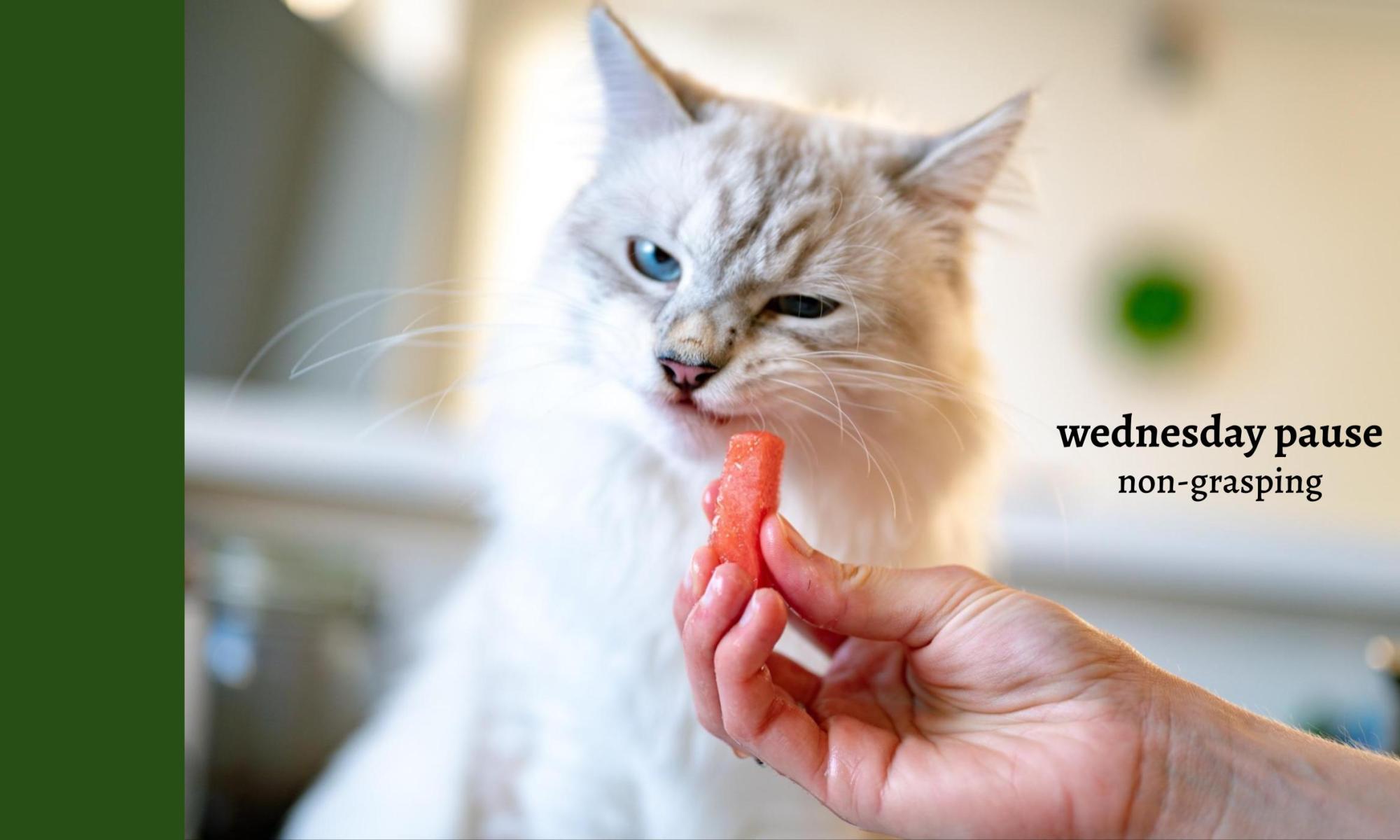
Waking Up From Grasping

Obsessively grasping for something or someone leads us down the path to distress or suffering if we’re not mindful. Here’s to becoming aware of it in thoughts and actions, and letting go by simply observing and moving the attention back to the breath, and becoming more discerning of where we should be paying attention. The quality of our lives depends on where our attention is. There’s no need to grasp.

As Basho, the Zen monk says:

Sitting silently,

Doing nothing,

Spring comes and grass grows by itself.

Guide: Noelle Lim

Image credit: Piotr Musiol, Unsplash

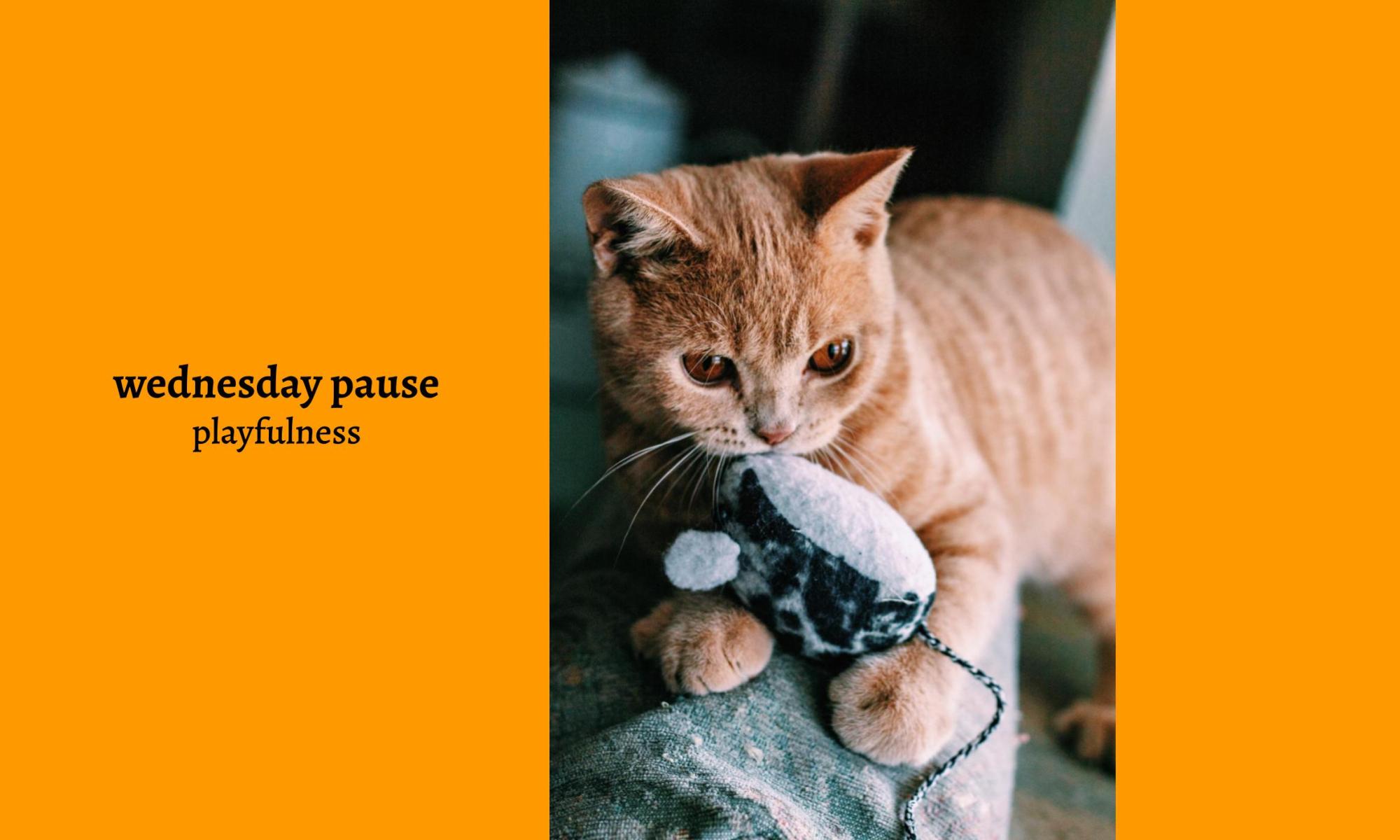
Playfulness

This practice is about not taking ourselves too seriously whenever we find it difficult to sit — a practice of not taking life too seriously when things don’t go our way. Playfulness helps cultivate patience. And when we can sit with that quality, we see things with clarity. What’s clear is clear, what’s veiled is veiled – nothing more.

Haiku by Matsuo Basho

A day of quiet gladness,

Mount Fuji is veiled

In misty rain.

Guide: Noelle Lim

Image credit: Nina Mercado, Unsplash

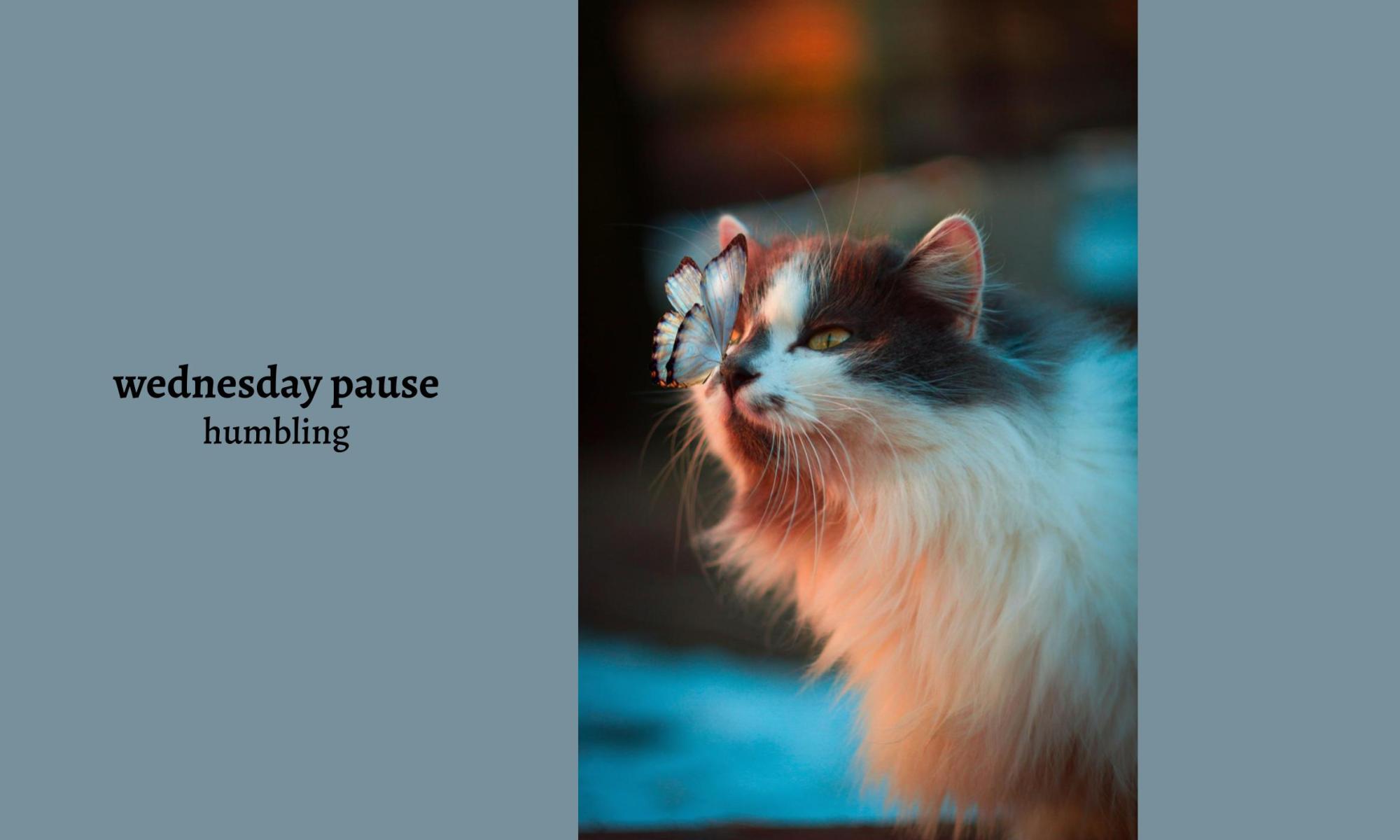
Humbling

Patience is said to be a virtue to help us deal with distress or when things are not going our way. Underlying patience is humility, and so here’s a practice on humility. Humility is not about cancelling out our voice or lowering our self-esteem. Rather it’s the quiet confidence that we can go about our lives without needing overt validation. When we become like the bald eagle that flies towards the storm, only then can we go above it and become more.

surrendering like an eagle, Noelle Lim

if we remind ourselves of our imperfections

tell us we’re not good enough

punishing the fragile ego

life becomes a suffering

but what if we can be for changing

if answering setbacks

means leaving outside the ego

the enemy of courage locking us in a wallow 

instead, why not surrender and accept

on hand, a willing heart

to life’s irregular cracks and weathering

we’ll see the play of her seasons

and witness the glory of her possibilities

let life not beat us down

instead, accept her grand invitation

to climb onto her big, strong wings 

like those of the bald eagle

that flies towards the storm

gliding higher, gathering more strength, more speed

soaring above rain clouds

why let the ego keeps us on our knees

when we can fly above the gust

an eagle 

does not dwell on the size of her claws

nor apologises for her flaws

instead she opens up to the call of life

accepting a lift from the stormy winds

going higher, going further, she becomes more.

Guide: Noelle Lim

Image credit: Karina Vorozheeva, Unsplash

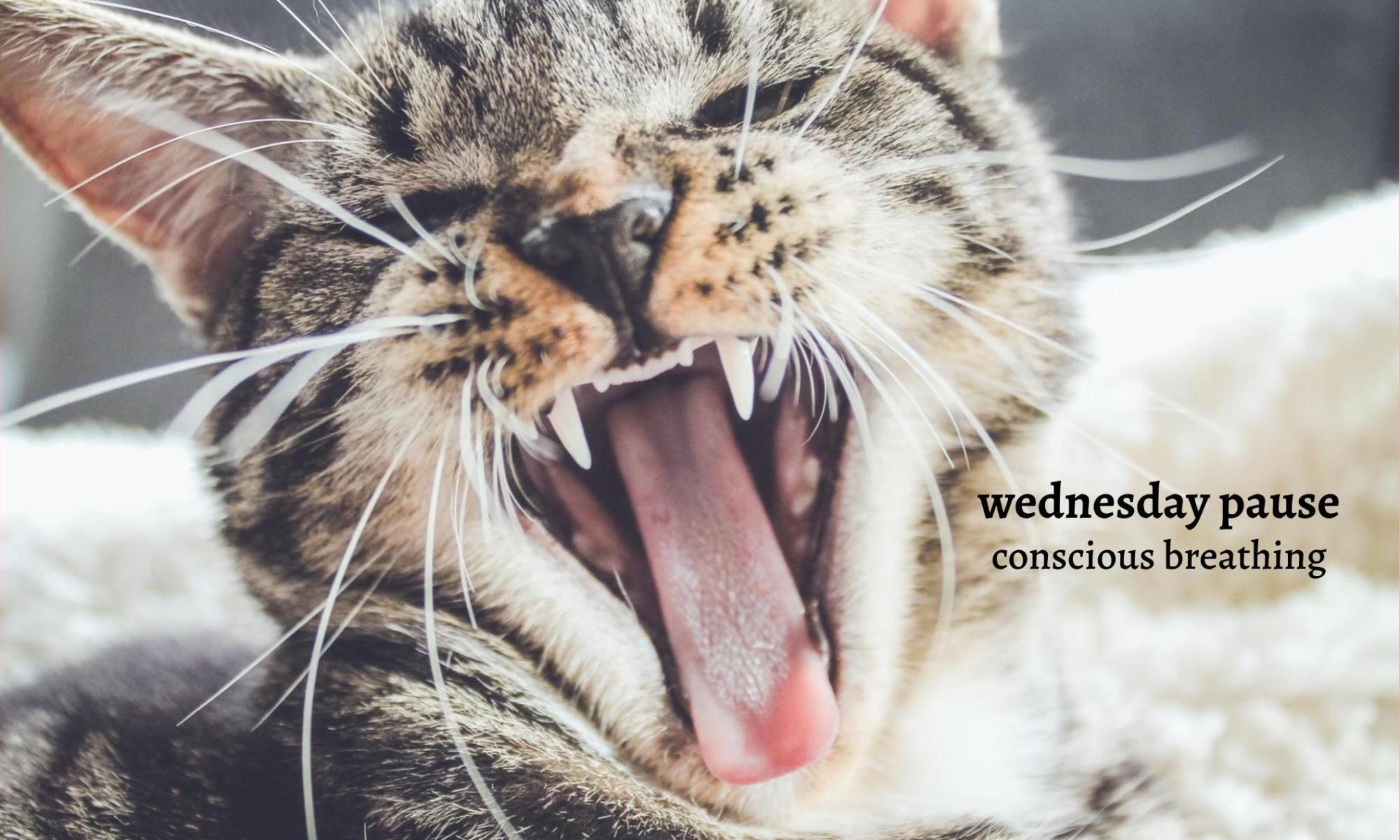
Conscious Breathing

The breath represents life, it’s the first thing we do when we become a life. Being conscious of the breath also has the benefit of activating the parasympathetic nervous system that restores us to equilibrium and calms us down.

It’s also possible that the breath can be triggering. If you find it difficult to focus on the breath, just do the best you can as an observer, bringing to bear just an intention to observe and nothing else.

Breathing (extract), Thich Nhat Hanh

Breathing in,
I have become space
without boundaries.
I have no plans left.
I have no luggage.

Breathing out,
I am the moon
that is sailing through the sky of utmost emptiness.
I am freedom.

Guide: Noelle Lim

Image credit: Erik Jan Leusink, Unsplash

Exploring Courage

Exploring courage starts with preparation – how we are starting and then continuing in the practice with a strong back (signalling confidence, conviction), soft front (care) and paying attention moment-by-moment (the little ways).

Courage (extract), Anne Sexton

Later,

when you face old age and its natural conclusion

your courage will still be shown in the little ways,

each spring will be a sword you’ll sharpen,

those you love will live in a fever of love,

and you’ll bargain with the calendar

and at the last moment

when death opens the back door

you’ll put on your carpet slippers

and stride out.

Guide: Noelle Lim

Image credit: Manel Sean Kcl, Unsplash

Saying Yes

Saying yes to all our experiences—thoughts, emotions, moods, physical sensations—is not a weakness. This is a practice of just saying yes to our unfolding experiences as they are and noticing how our resistance and tension ease thereafter, when we no longer all these moments to have a grip over our sense of wellbeing.

Saying Yes (extract), RoseAnn V. Shawiak

Life falls, sliding through a side door, one that has not

been marked, but opens quickly when given a second chance.

An entire world opens up to an invitation, love is emanating

from people everywhere.

Splendidly opening upon a new shore, being rinsed clean, a

pure and newly sprung life.

All around sounds of nature are pouring forth in tribute of

our lives and experiences.

Bowing down, kneeling on one knee, saying yes with a gentle

happiness and a joy so great it cannot be contained.

Flowing out upon others who are in need, filling them with

the love and peace of a new world without war.

Guide: Noelle Lim

Image credit: Erik Jan Leusink, Unsplash

Responding To Pain

Turning towards, opening to the feeling pain spot by spot, moment by moment with kindness and gentleness instead of running away and avoiding.

On Pain (extract), by Khalil Gibran

Your pain is the breaking of the shell that encloses 
your understanding. 

Even as the stone of the fruit must break, that its 
heart may stand in the sun, so must you know pain. 

And could you keep your heart in wonder at the 
daily miracles of your life, your pain would not seem 
less wondrous than your joy; 

And you would accept the seasons of your heart, 
even as you have always accepted the seasons that 
pass over your fields. 

Guide: Noelle Lim

Image credit: Chris Abney, Unsplash

Let Me Be Grateful

Using the phrase “let me be grateful for this moment” as the anchor whenever the mind starts to wonder and we get lost in the busyness of our thoughts. Gratitude is probably one of the most powerful healers.

The Gift, Mary Oliver

Be still, my soul, and steadfast.
Earth and heaven both are still watching
though time is draining from the clock
and your walk, that was confident and quick,
has become slow.

So, be slow if you must, but let
the heart still play its true part.
Love still as once you loved, deeply
and without patience. Let God and the world
know you are grateful.
That the gift has been given.

Guide: Noelle Lim

Image credit: Liang Wang, Unsplash

Peace Of Mind

Cultivating peace of mind by letting go of thinking, thinking to intentionally choosing when we want to place our attention.

Peace, Sara Teasdale

Peace flows into me

As the tide to the pool by the shore;

It is mine forevermore,

It ebbs not back like the sea.

I am the pool of blue

That worships the vivid sky;

My hopes were heaven-high,

They are all fulfilled in you.

I am the pool of gold

When sunset burns and dies–

You are my deepening skies,

Give me your stars to hold.

Guide: Noelle Lim

Image credit: Vinicius Henrique Photography, Unsplash

Breathing deeply

Using the breath to keep us grounded and steady, and to release tension to find your way home.

Breathe Deeply, by Nina Heyen

Let your body sink

into the arms of silence,

the deep solace of a soul at peace.

Stop the world for just one moment,

and inhale the soothing still.

Rest your mind for just one instant,

and let your breath

steer your home.

Guide: Noelle Lim

Image credit: Designervn, Unsplash

Letting Go Reactions

In mindfulness meditation, we’re cultivating the quality of non-grasping, non-driven-doing by staying with the breath or the body, and letting go the need to rise to the bait of our impulses to act. Often times, we could be reacting for no good reason.

In Blackwater Woods, by Mary Oliver (extract)

To live in this world

you must be able to do three things:

to love what is mortal;

to hold it against your bones

knowing your own life depends on it;

and, when the time comes to let it go,

to let it go.

Guide: Noelle Lim

Image credit: Borna Bevanda, Unsplash

Thoughts Are Like The Wind

Thoughts such as judgments, beliefs, and assumptions are transient, impermanent, and mental events. The invitation is to simply observe our thoughts, and not get hooked, believe or act on everything that the mind suggests, and instead to practise

The Windy Day, Annette Wynne

The wind was very bad that day,

It blew my brand new hat away,

It blew and blew and blew—

It should have found some better things to do.

Perhaps the sailor on the sea

Wanted that wind that pestered me,

But the wind just stayed around and blew

My things about. When he was through

He went and hid himself away

And never came again that day.

Guide: Noelle Lim

Image credit: Alvan Nee, Unsplash

The Breath

The breath is closest to us, it’s what gives us life and sustains us. Using the breath as an anchor is one of the most powerful ways to stay anchored in the present moment. Breathing seems like the most insignificant thing we do every day yet miracles are in the smallest things if we care to observe.

Breath, Kabir

Are you looking for me? I am in the next seat.
My shoulder is against yours.
You will not find me in stupas, not in Indian shrine rooms,
nor in synagogues, nor in cathedrals:
not in masses, nor in kirtans, not in legs winding around your
own neck, nor in eating nothing but vegetables.
When you really look for me, you will see me instantly—
you will find me in the tiniest house of time.
Kabir says: Student, tell me what is God?
He is the breath inside the breath.

Guide: Noelle Lim

Image credit: Timo Volz, Unsplash