
Aliveness

Aliveness

Mindfulness meditation offers a practice of returning to experiencing the world as it is, to return to the raw experience of feeling each moment without thinking, thinking, pre-conceived ideas and judgment. Feeling alive is feeling the sensations that come to us – the cool air brushing against the skin, the rhythm of the breath, and the faint pulses felt in the body. Each breath is a quiet miracle of keeping us alive. We are simply here, breathing, giving ourselves the gift of the present moment instead of being lost in doing, thinking, doing, thinking.

Alive by Haashimite (extract)

To be Alive is to grow
To keep Living
Through the calm of dawn, and the bustle of noon, and the sloth of sundown
Just stay living
Embrace the self balancing emotions
And dread living-dead
For in that is true death
A great life is a life lived Alive

Awake to every feel
A life of sading and cries, and of happiness and laughter
And growth
Intertwined in perfect harmony
And when the sunlight blesses our paths a last time
Thanks to living Alive
The joy of rest is fully savoured.

Guide: Noelle Lim

Image credit: Bianca Ackermann, Unsplash
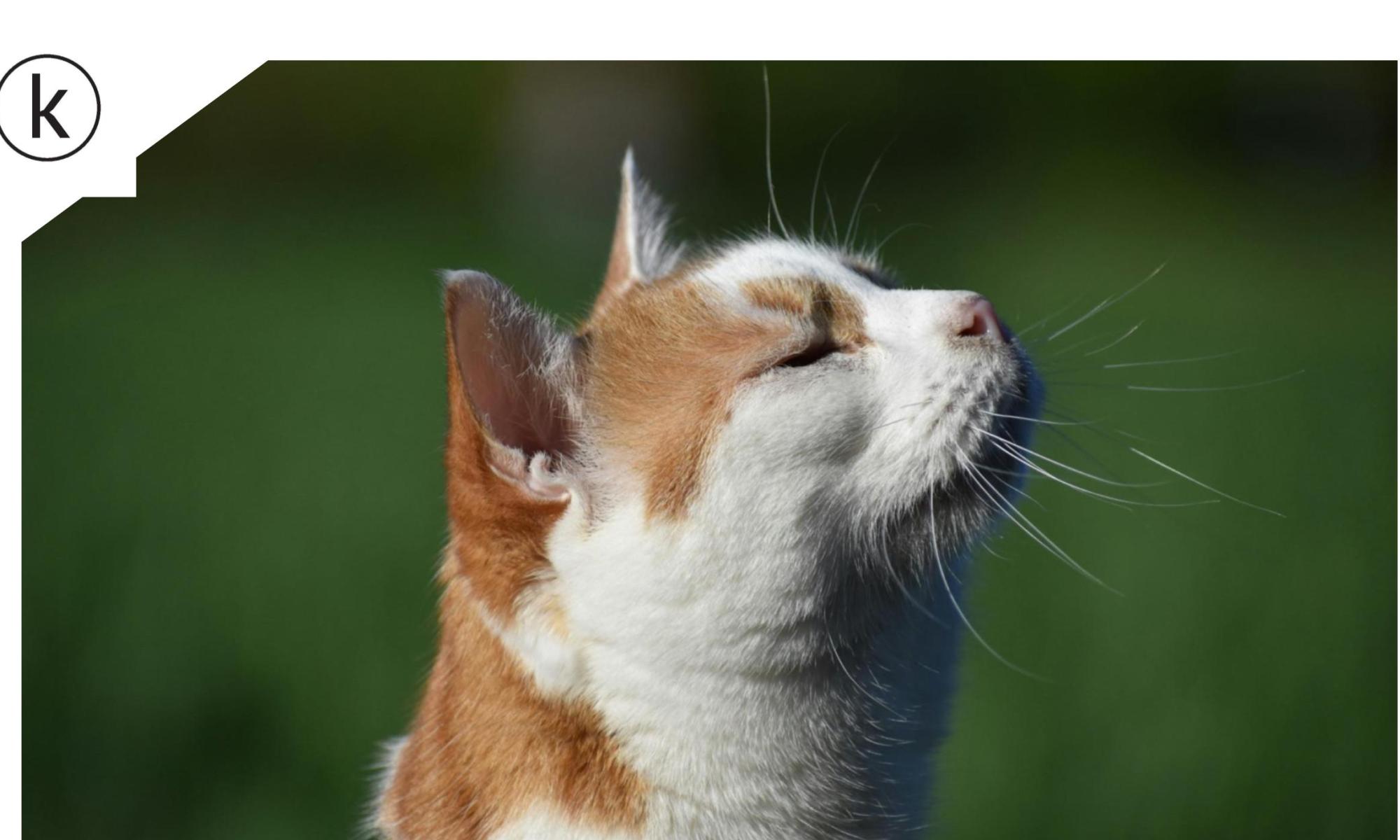
Breath Around The Nostrils

Returning to the breath by noticing the sensations around the nose.

In mindfulness meditation, we often speak of “returning to the breath”, and one way is paying attention to the sensations felt around the nose or nostrils. Feeling the air as it enters, perhaps cool, soft tingling, feeling the muscle of the flap of the nose moving, feeling the air leaving, warmer, subtler. The tiny area becoming an anchor, simply allowing yourself to fee the breath. As thoughts can pull us in a hundred directions, noticing the breath at the nostrils invites us back to the present moment.

By feeling the breath at the nose, we’re not just training attention. We’re remembering the preciousness of life — not in grand gestures, but in the wondrous sensations of each inhale and exhale.

The Breath Is Life’s Teacher, Donna Martin (extract)

Observe me, says the Breath, and learn to live effortlessly in the Present Moment.
Feel me, says the Breath, and feel the Ebb and Flow of Life.
Allow me, says the Breath, and I’ll sustain and nourish you, filling you with energy and cleansing you of tension and fatigue.

Move with me, says the Breath, and I’ll invite your soul to dance.

Make sounds with me and I shall teach your soul to sing.
Follow me, says the Breath, and I’ll lead you out to the farthest reaches of the Universe, and inward to the deepest parts of your inner world.

Notice how you take me in, invites the Breath. Is it with joy… with gratitude…? Do you take me in fully… invite me into all the inner spaces of your home? …Or carefully into just inside the door? What places in you am I not allowed to nourish?

And notice, says the Breath, how you release me. Do you hold me prisoner in closed up places in the body? Is my release resisted… do you let me go reluctantly, or easily?

I am the Breath.
Life is the Musician.
You are the flute.
And music – creativity – depends on all of us. You are not the Creator… nor the Creation.
We are all a part of the process of Creativity… You, Life, and me: the Breath.

Guide: Noelle Lim

Image credit: Liwanu Sutter, Unsplash

Art of Watching

The art of watching without analysing, fixing, chasing and suppressing is a radical practice of presence, patience and compassion, allowing us to relate to whatever that arises, the welcomed and unwelcomed, with spaciousness and graciousness.

In mindfulness meditation, to watch is to observe with openness, care and without judgement, letting thoughts, emotions and sensations move along. We simply witness and not judge.

As we settle into stillness, anchoring ourselves to the breath or the body, we begin noticing the stream of experience flowing through our awareness—thoughts, emotions, sensations. Often subtle, sometimes stormy but we just keep sitting in awareness.

When thoughts, emotions, or sensations arise, we note: “thinking,” “feeling,” “sensation“, with the breath as the home base.

As we practice watching, over time, strong feelings lose their grip, and we learn to simply give ourselves space not to react.

Watching is not to control, to escape or to avoid. It is to truly see—and in seeing, to be.

Art of Watching, by Wendy Mitchell

Just sitting and watching in silence

Patience is all that you need

To see nature appear

To appreciate what was a tiny seed

To hear the birds singing happily

To watch them fly around

Yet when they settle near by

Joy, simply abounds

You have to be still, you have to be quiet

And wait just patiently

And then the reward will appear

And be there in front quite graciously.

So patience is a virtue

Or so they say

But for nature it’s paramount

Blink and it will have gone away….

Guide: Noelle Lim

Image credit: Shobha GS, Unsplash

Letting It Go

Whenever you notice yourself grasping tightly to something—an expectation, a grudge, or a worry—pause, breathe, release, gently reminding yourself: you can let go, even if just a little.

By letting go, not hanging to things, people and circumstances for dear life, or letting go what no longer serves us, creates space for new possibilities.

Letting go in meditation helps us observe these thoughts without attachment, reducing their power over us.

After all, thoughts, emotions and sensations, while they seem real, are not tangible and are ever changing.

Letting go does not mean suppressing or ignoring thoughts and emotions. It means acknowledging them, feeling them fully, and then releasing them with intention.

Over time, this practice teaches us that freedom isn’t found in control but in our willingness to release.

We are cultivating the ability to move through life with more ease, lightness, and presence.

Let It Go, Danna Faulds

Let go of the ways you thought life would unfold, the holding of plans or dreams or expectations – Let it all go.
Save your strength to swim with the tide.

The choice to fight what is here before you now will only result in struggle, fear, and desperate attempts to flee from the very energy you long for.
Let go. Let it all go and flow with the grace that washes through your days whether you received it gently or with all your quills raised to defend against invaders.

Take this on faith; the mind may never find the explanations that it seeks, but you will move forward nonetheless.
Let go, and the wave’s crest will carry you to unknown shores, beyond your wildest dreams or destinations.
Let it all go and find the place of rest and peace, and certain transformation.

Guide: Noelle Lim

Image credit: Dagmara Dombrovska, Unsplash

Our Automatic Tendencies

An aspect of mindfulness and transforming our lives and wellbeing is noticing our automatic tendencies. These are the habitual thought patterns and reactions that occur almost unconsciously, instinctively, shaping our perceptions, interactions and behavior.

You might notice how quickly your mind jumps to conclusions in a situation or how easily you fall into judgment, putting up barriers, worry or frustration. These automatic tendencies are part of the mind’s way of functioning, surviving, shaped by past experiences and conditioning. Some of these tendencies may protect us, or have negligible consequences, or may be harming us or hindering us from advancing in our studies or at work.

Mindfulness offers the pause to step back and observe these tendencies without getting caught in them. It’s not about suppressing, eliminating nor justifying them but about becoming aware of their presence. This awareness is the first step in creating choice—rather than reacting automatically, we gain the ability to respond intentionally and helpfully.

By bringing a gentle curiosity to these habits, we begin to see them for what they are—mental patterns, not truths, and not our identity.

During this practice, the invitation is noticing what automatic tendencies arise such as judgments, restlessness and what happens after that, how do they influence our experience of the practice? And then bringing the mind back to our breath as a way to interrupt the cycle of automatic reactions.

It Is Marvellous, Elizabeth Bishop

It is marvellous to wake up together
At the same minute; marvellous to hear
The rain begin suddenly all over the roof,
To feel the air clear
As if electricity had passed through it
From a black mesh of wires in the sky.
All over the roof the rain hisses,
And below, the light falling of kisses.

And from the same simplified point of view
Of night and lying flat on one’s back
All things might change equally easily,
Since always to warn us there must be these black
Electrical wires dangling. Without surprise
The world might change to something quite different,
As the air changes or the lightning comes without our blinking,
Change as our kisses are changing without our thinking.

Guide: Noelle Lim

Image credit: Anton Lochov, Unsplash

Noticing the choices we make

It’s said that the choices we make shape our destiny. Here’s a practice of noticing the little choices we make moment-by-moment to deepen our capacity to become more conscious of the important choices we make on a daily basis that could have far-reaching consequences. In mindfulness, the invitation is to notice that we always have a choice of how we want to engage with whatever thought that arises – sometimes we can’t help thinking about something – how we choose to face it is a choice. We could choose to judge ourselves or simply just watch that thought.

Inspired by the Autobiography of 5 short chapters

I.

I walk down the street.
There is a deep hole in the sidewalk. I fall in. I am lost. I am helpless.
It isn’t my fault.
It takes forever to find a way out.

II.

I walk down the same street. There is a deep hole in the sidewalk. I still don’t see it. I fall in again.
I can’t believe I am in the same place. It isn’t my fault.
It still takes a long time to get out.

III.

I walk down the same street. There is a deep hole in the sidewalk.
I see it there, I still fall in.
It’s habit. It’s my fault. I know where I am. I get out immediately.

IV.

I walk down the same street. There is a deep hole in the sidewalk. I walk around it.

V.

I walk down a different street.

Guide: Noelle Lim

Image credit: Nine Koepfer, Unsplash

Dealing With Distractions

A thought easily produces a chain of ideas, intentions, stories, and next thing we know, time has passed. Life has passed. Sometimes we unwittingly shoot another arrow, for example, chiding ourselves for having certain thoughts.

Another trap is when a negative thought arises, we think “positively” to “neutralize”. That is helpful if the intention is to see a more realistic picture. It is not helpful if we’re adding thoughts that are potentially false and speculative simply to make ourselves feel better or to justify ours or other peoples’ actions. It’s a survival instinct.

An alternative response is to let thoughts be like water flowing in the stream instead of adding more. And if we choose to, mindfully directing our energy to thoughts that really matter and to be kind to ourselves for having thoughts. We look deep down to find what matters and what is true for us.

Inspired by Ryokan’s poem:

Keep your heart clear

And transparent,

And you will

Never be bound.

A single disturbed thought

Creates ten thousand distractions.

Guide: Noelle Lim

Duration: 22 minutes

Image credit: Yan Laurichesse, Unsplash

Emptying The Boat

Is there something that’s sitting on your boat that’s slowing your down? Causing you to crave or to resist? Causing unhappiness? Here’s a practice on letting go.

Duration: 25 minutes

Guide: Noelle Lim

Image credit: Natalya Erofeeva, 123rf

This is a recording of our Wednesday Pause sessions, 12:30-1pm SGT (4:30am GMT). Register here

Stillness

Finding stillness in calm. Being still puts us in a state of not always needing to react and fix, and to simply let go.

Duration: 23 minutes

Guide: Noelle Lim

Image credit: Kote Puerto, Unsplash

Cultivating Attention

Start the new year with the resolution to keep our resolutions haha. Here’s to cultivating attention and being intentional in directing our mental energy. With a focused mind and warm heart, let’s conquer the world!

Hearing The Silence

The mind gets caught up in thinking and mental chatter. What if we paid particular attention to the silence, the pauses between thoughts? Like noticing the white, not just the black. Noticing calm, not just the chaos. Noticing the little pleasures in life, not just the problems.

This practice of Hearing The Silence is inspired by a session with MBCT teacher Trish Bartley. She referred to one of her favourite conductors, the late Claudio Abbado who when asked what was his favourite part, he said, “The silence that comes after the music.” Indeed.

May silence lead you home.

Instructor: Noelle Lim

Duration: 5 minutes

Also on Linkedin | IGTV | SoundCloud