
Live In The Present

Too frequently, we find ourselves trapped in the confines of thoughts, rather than fully engaging with the present moment. The invitation is to step outside the boundaries of our minds and wholeheartedly embrace everything that unfolds moment-by-moment.

Your Start Dying Slowly, by Martha Medeiros

You start dying slowly
if you do not travel,
if you do not read,
if you do not listen to the sounds of life,
if you do not appreciate yourself.

You start dying slowly
When you kill your self-esteem;
When you do not let others help you.
You start dying slowly
If you become a slave of your habits,
Walking everyday on the same paths…
If you do not change your routine,
If you do not wear different colors
Or you do not speak to those you don’t know.

You start dying slowly
If you avoid to feel passion
And their turbulent emotions;
Those which make your eyes glisten
And your heart beat fast.

You start dying slowly
If you do not change your life when you are not satisfied with your job, 
or with your love,
If you do not risk what is safe for the uncertain,
If you do not go after a dream,
If you do not allow yourself,
At least once in your lifetime,
To run away from sensible advice.

Guide: Noelle Lim

Image credit: Eric Han, Unsplash

Habitual Reactions

Mindfulness is also about paying attention to our reactions especially the habitual ones. When a negative thought arises, what do we tend to do? Push it away, justify it, ruminate on it or just let it be. Or when the feeling of wanting to give up, do we tend to do so, or how do we try very hard to stay the course? The invitation in this practice is to stop, pause and simply notice as the first step to becoming aware what reactions serve us well or are no longer helpful.

Stopping by Woods on a Snowy Evening, by Robert Frost

Whose woods these are I think I know.   

His house is in the village though;   

He will not see me stopping here   

To watch his woods fill up with snow.   

My little horse must think it queer   

To stop without a farmhouse near   

Between the woods and frozen lake   

The darkest evening of the year.   

He gives his harness bells a shake   

To ask if there is some mistake.   

The only other sound’s the sweep   

Of easy wind and downy flake.   

The woods are lovely, dark and deep,   

But I have promises to keep,   

And miles to go before I sleep,   

And miles to go before I sleep.

Guide: Noelle Lim

Image credit: Paul Hanaoka, Unsplash

Dealing With Anxiety

Anxiety could creep up unexpectedly or arises when we take on too much on to our plate or can’t seem to get to the finishing line with our endless to-do list. In dealing with anxiety, we shift the attention to a part of the body that feels comfortable such as the breath, or the surface of the skin, feeling the touch of air or clothing.

I am too alone in the world, and not alone enough, by Rainer Maria Rilke (extract)

I am much too alone in this world, and not alone
    enough
to make every minute holy.
I am much too tiny in this world, and not tiny
    enough
just to lie before you like a thing, shrewd and secretive.
I don’t want to stay folded anywhere,
because where I am folded, there I am a lie.
And I want my grasp of things
true before you. I want to describe myself
like a painting that I looked at
closely for a long time,
like a saying that I finally understood,
like the pitcher I use every day,
like the face of my mother,
like a ship
that took me safely
through the wildest storm of all.

Guide: Noelle Lim

Image credit: Anton Lochov, Unsplash

Responding To Burnout

This is a practice of responding to burnout, which manifests as the feeling of exhaustion, drained and hitting our limits physically and emotionally, due to prolonged stress or lack of balance. The invitation is to slow down, honoring the present moment.

You Better Slow Down (extract), by David Weatherford

Have you ever watched kids on a merry-go-round,
or listened to rain slapping the ground?

You better slow down, don’t dance so fast,
time is short, the music won’t last.

Do you run through each day on the fly,
when you ask “How are you?”, do you hear the reply?

When the day is done, do you lie in your bed,
with the next hundred chores running through your head

When you run so fast to get somewhere,
you miss half the fun of getting there.

When you worry and hurry through your day,
it’s like an unopened gift thrown away.

Life isn’t a race, so take it slower,
hear the music before your song is over.

Guide: Noelle Lim

Image credit: Natalia Nikolaiev, Unsplash

U-Turn & Awaken

When we find ourselves on the downward spiral of negative emotions – anger, frustration, disappointment, conflict – know that we can choose how to respond. One is to make a u-turn and come back to the breath, the body, an anchor to awaken to the present moment instead of sliding further down the path of distress.

U-turn, by Jerry Corstens

What’s empty will empty.
What’s full will refill.

What’s picked up starts rising.
What’s dropped goes downhill.

What’s broken keeps breaking.
What’s whole will repair.

What’s backwards can U-turn
Once it grows aware.

What’s given to, giveth.
What’s taken from, takes.

What’s fallen keeps falling,
Until it awakes.

Guide: Noelle Lim

Image credit: Sarah J, Unsplash

Keeping It Light

It’s easy, almost instinctive to get caught up with emotional dramas. Here is an exercise of cultivating the ability to lighten up when the brain is hijacked, when we don’t get what we want.

Island, Aldous Huxley (extract)

“It’s dark because you are trying too hard. 
Lightly child, lightly. Learn to do everything lightly. 
Yes, feel lightly even though you’re feeling deeply. 
Just lightly let things happen and lightly cope with them. 

So throw away your baggage and go forward. 
There are quicksands all about you, sucking at your feet, 
trying to suck you down into fear and self-pity and despair. 
That’s why you must walk so lightly. 
Lightly my darling, 
on tiptoes and no luggage, 
not even a sponge bag, 
completely unencumbered.” 

Guide: Noelle Lim

Image credit: Jasmin Schuler, Unsplash

Slowing Down: Acknowledging The Body

When the mind gets busy with thoughts, turning to the body offers an alternative to step out of rumination, to create more space between thoughts and actions, and to find a sense of peace and grounding.

The Body, Charles Simic

This last continent

Still to be discovered.

My hand is dreaming, is building

Its ship. For crew it takes

A pack of bones, for food

A beer-bottle full of blood.

It knows the breath that blows north.

With the breath from the west

It will sail east each night.

The scent of your body as it sleeps

Are the land-birds sighted at sea.

My touch is on the highest mast.

It cries at four in the morning

For a lantern to be lit

On the rim of the world

Guide: Noelle Lim

Image credit: Jens Herrndorff, Unsplash

Slowing Down: Stabilising Attention

A mind free of worry, hangups and cravings allows us to go back to our true original being, one that is feels whole, at peace, joyfully curious and unencumbered. We use the breath, chest and abdomen to fill our awareness as we breath and cultivate stability and freedom.

Half Life, The Prophet, by Khalil Gibran (extract)

Do not live half a life 
and do not die a half death
If you choose silence, then be silent
When you speak, do so until you are finished 
If you accept, then express it bluntly
Do not mask it
If you refuse then be clear about it 
for an ambiguous refusal is but a weak acceptance
Do not accept half a solution
Do not believe half truths
Do not dream half a dream
Do not fantasize about half hopes
You are a whole that exists to live a life,
not half a life.”

Guide: Noelle Lim

Image credit: Pascal Debrunner, Unsplash

Slowing Down: On The Outbreath

The foundation of learning to slow down and cultivating mindfulness, we stabilize the attention using the breath.

Why the breath?

The breath is closest to us, and is often immediately available and without fuss.

The predictable, certain and reliable pattern of breathing, where the in-breath would be followed by a pause and the outbreath, is a stabilising factor to achieve coherence within us.

Breathing rejuvenates our cells, fuels us, is a gift that continues because to live is to breathe.

So whenever you’re down, just breathe. Whenever you feel like reaching out for the next cookie, just breathe and slow down.

In Blackwater Woods (extract), Mary Oliver

To live in this world

you must be able

to do three things:

to love what is mortal;

to hold it

against your bones knowing

your own life depends n it;

and, when the time comes to let it go,

to let it go

Guide: Noelle Lim

Image credit: Neom, Unsplash

Slowing Down – Starting With Sitting

For most part of 2024, we’ll be focusing on slowing down in our Wednesday Pause sessions. The starting point would be to sit.

Sitting lowers our center of gravity, enabling us to feel more grounded.

Then using the outbreath, we bring the mind back to reminding ourselves to slow down, to become conscious that we’re sitting, how we’re sitting.

The invitation is to practice this whenever you have moments to pause, say when you are in the train or bus. Even when you are driving and stopping to wait for the lights to turn green, you can check in with the body, reminding yourself to slow down, to notice how you are sitting.

What would the world do with me?, by JP

Why is it

that I only sit quietly

in the morning?

Am I allowed just

one breath

of wholeness

before the barrage

of the day?

What would happen

if I claimed

all my other breaths

in the name of peace –

of saving a life?

What would the world

do with me?

Guide: Noelle Lim

Image credit: Priscilla du Preez, Unsplash

Precision & Kindness

Cultivating focus and concentration by precisely noting what is arising within us – “thinking”, “calmness is here”, “sleepiness is here” – and to do so gently without chiding ourselves for the experiences, taking a decentered view.

A Timbered Choir (excerpt), by Wendell Berry

I go among trees and sit still.
All my stirring becomes quiet
around me like circles on water.
My tasks lie in their places
where I left them, asleep like cattle.

Then what is afraid of me comes
and lives a while in my sight.
What it fears in me leaves me,
and the fear of me leaves it.
It sings, and I hear its song.

Then what I am afraid of comes.
I live for a while in its sight.
What I fear in it leaves it,
and the fear of it leaves me.
It sings, and I hear its song.

Guide: Noelle Lim

Image credit: Shantanu Parcharka, Unsplash

I Carry Your Burden

A meditation inspired by Tonglen, a practice by Tibetan Buddhists about giving and taking, or sending and receiving to awaken compassion for humanity. In generously sharing our merits, we find space for joy and peace and break down barriers with others.

Belonging, by John O’Donohue

May you listen to your longing to be free
May the frames of your belonging be generous enough for your dreams. May you arise each day with a voice of blessing whispering in your heart May you find a harmony between your soul and your life
May the sanctuary of your soul never be haunted
May you know the eternal longing that lives at the heart of time May there be kindness in your gaze when you look within
May you never place walls between the light and yourself
May you allow the wild beauty of the invisible world to gather you Mind you and embrace you in belonging.

Guide: Noelle Lim

Image credit: Willian Justen de Vasconcellos, Unsplash

Beginner’s Mind

A beginner’s mind, imbued by kind curiosity instead of judgment, frees us of past assumptions and worries about the future, enabling us to stay in the present moment with a sense of calm and ease.

Wonder, by Misuzu Kaneko

I wonder why the rain that falls from black clouds shines like silver.

I wonder why the silkworm that eats green mulberry leaves is so white.

I wonder why the moonflower that no one tends to bloom on its own.

I wonder why everyone I ask about these things laughs and says, “That’s just how it is.”

Guide: Noelle Lim

Image credit: Europeana Wiad, Unsplash

Also viewable on https://youtu.be/MhyUdv60N-I

Slowing Down

Too often, we’re rushing from one idea, task, place to another. This is an invitation to just live – slowing down, and allowing the mind and body to unpack what is going on and process emotions and sensations. Inspired by Thich That Hahn’s poetry Drink Your Tea.

Drink your tea slowly and reverently,
as if it is the axis 
on which the world earth revolves 
– slowly, evenly, without 
rushing toward the future;
Live the actual moment.
Only this moment is life.

Guide: Noelle Lim

Image credit: Alexander London

Lovingkindness Circle

Here’s a practice of visualising a circle of loving and kind human beings surrounding you. They can be people who know you, your family members, friends, colleagues, mentors, bosses who love or have been kind and supportive of you, or people whom inspire you by their kindness. Visualising that they’re sending you well wishes and likewise you are wishing them well. Choosing a well wishing phrase that’s powerful and meaningful to you. A meditation from Sharon Salzberg’s book Real Happiness.

Late Fragment, by Raymond Carver

And did you get what

you wanted from this life, even so?

I did.

And what did you want?

To call myself beloved,

to feel myself

beloved on the earth.

Guide: Noelle Lim

Image credit: Oleg Ivanov, Unsplash

Lovingkindness For Pain

Sharon Salzburg writes in her book Real Happiness that our intuitive wisdom often tells us to let go, to be peaceful, to relinquish efforts to control. But our cultural conditioning of clinging and control, personal history and people tell us we should hold on to people (we need to get married), pleasure and distractions in order to be happy. Here is a meditation of lovingkindness words, like “May I be open to the unknown, like a bird flying free”. Feel free to modify the well wishing to words that resonate with you.

Please call me by my true names, by Thich Naht Hahn

My joy is like Spring, so warm
it makes flowers bloom all over the Earth.
My pain is like a river of tears,
so vast it fills the four oceans.

Please call me by my true names,
so I can hear all my cries and my laughter at once,
so I can see that my joy and pain are one.

Please call me by my true names,
so I can wake up,
and so the door of my heart
can be left open,
the door of compassion.

Guide: Noelle Lim

Image credit: Fuzzy Rescue, Unsplash

On Positive Emotions

It helps to nurture the positive parts of ourselves and make a point of paying attention to experiences that give us pleasure. Our automatic tendencies is to think of the worst case scenario, the unpleasant experiences. Sharon Salzburg in her book Real Happiness writes that it takes a conscious effort to include the positive. This is not intended to be phone positive nor to deny problems. The invitation is to pay attention to pleasant aspects of the day that we may easily overlook or ignore such as noticing a flower, a child’s hug, an acknowledgement from a pet. Then noticing the sensations of the emotion in the body, where and if there are any changing patterns. Also noticing what thoughts may be present as you bring to mind what’s pleasant and positive. Do you have a sense of feeling less confined or less stuck in automatic reactivity? Does the mind try to build stories around certain experiences? Maybe automatic negative thoughts tend to arise and may be hindering you from taking positive action.

A Birthday, by Christina Rossetti

My heart is like a singing bird
Whose nest is in a water’d shoot;
My heart is like an apple-tree
Whose boughs are bent with thickset fruit;

Guide: Noelle Lim

Image credit: Jae Park, Unsplash

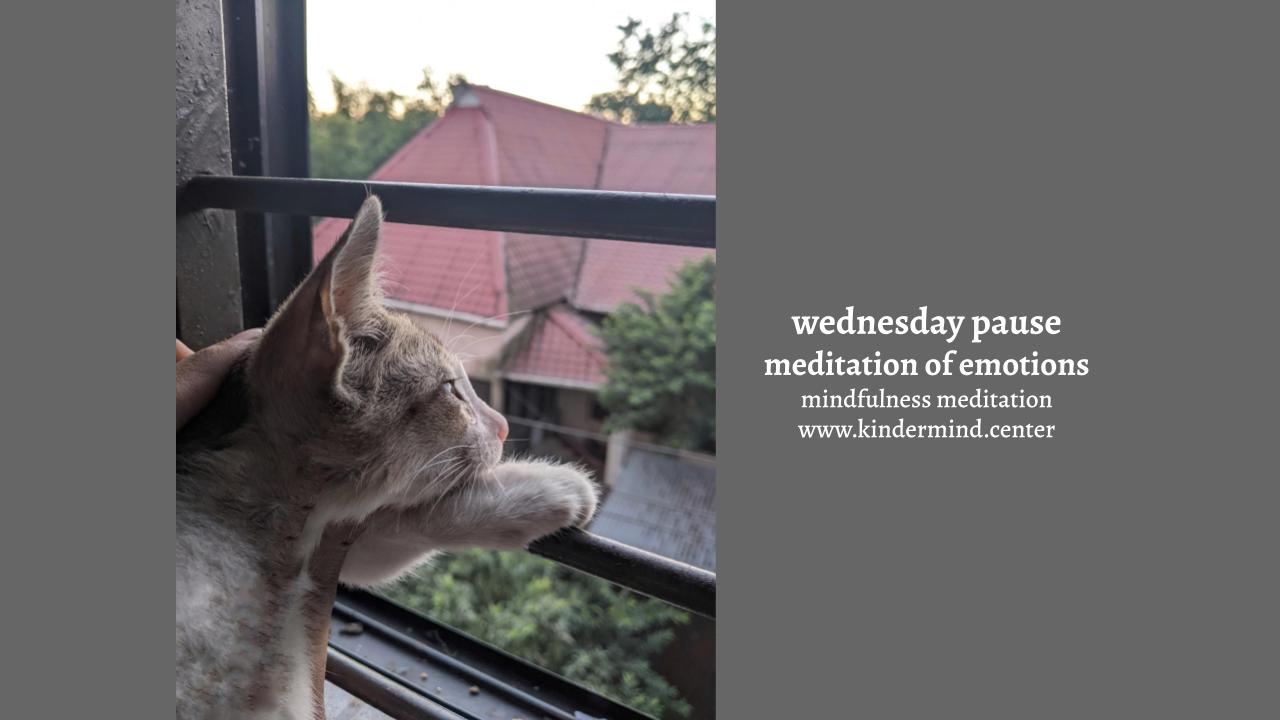
Meditation Of Emotions

In her book Real Happiness, Sharon Salzburg has a meditation around emotions. Starting with noting the tone of our thoughts or the feeling tone in the mind – does it feel calm? is it harsh? Noting it for example, “jealousy, jealousy”. Then location the emotion in the body, perhaps a knot in the stomach, the shoulders hunching up. Consciously resting in awareness, gently allowing emotions and feelings to be here as they are. Observe and not getting stuck in judging – “what am I feeling right now? What is its nature? Where am I experiencing it in my body?” Emotions come and go and the heart can infinitely heal if we allow it.

Poem from The Sun And Her Flowers, by Rupi Kaur

what is stronger 
than the human heart
which shatters over and over 
and still lives

Guide: Noelle Lim

Image credit: Ag Juwel, Unsplash

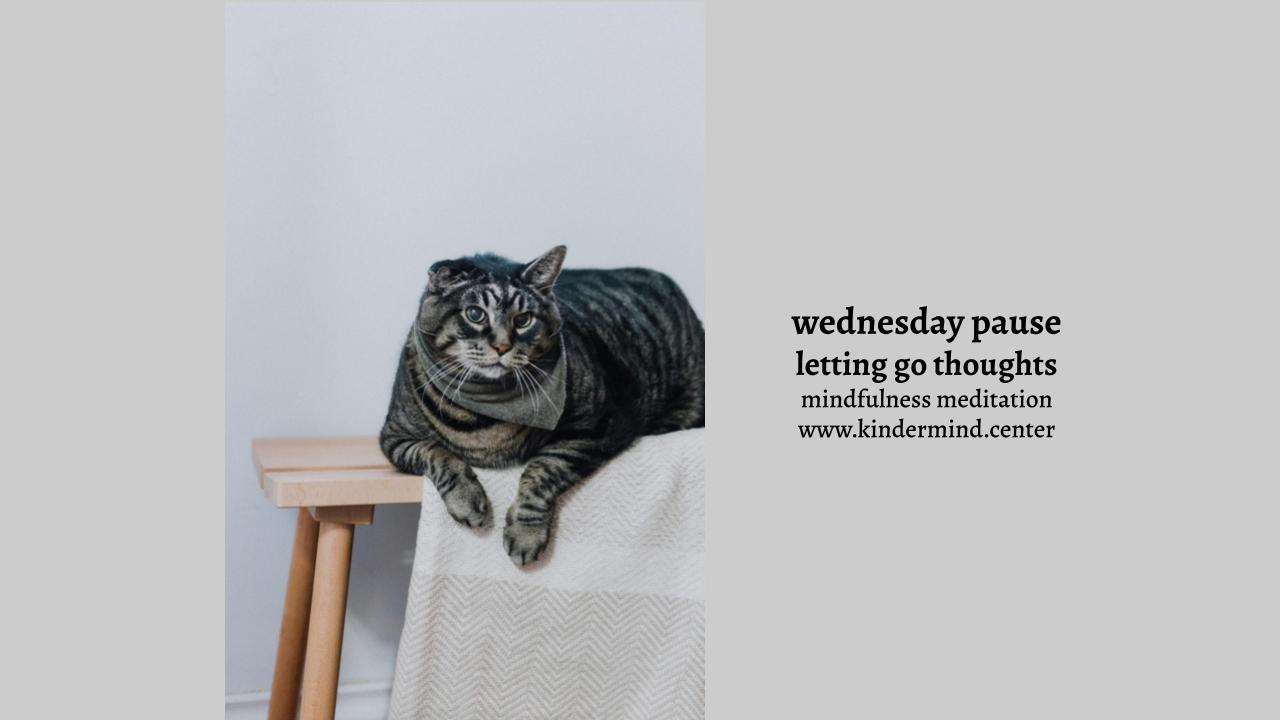
Letting Go Thoughts

In her book Real Happiness, Sharon Salzburg writes Michelangelo was once asked how he would carve an elephant, and he replied “I would take a large piece of stone and take away everything that was not the elephant”. Cultivating attention is something like recognising what is not the elephant – letting go of what is not essential, not helpful. So we let go of what is distracting especially those that kill our wellbeing chewing on it. In daily life, it could mean saying no to what sucks up our energy with no helpful outcomes so that we can spend time on what will grow us.

Growth, Madison Greene

how could I love myself
and hate the memories that have molded me?
my roots are planted deep beneath the earth
but petal by petal I am growing
making peace with my past 
it hurts to stretch this much
but I have learned that I was made for more than just unraveling 
and look at how far I’ve come, at how much I’ve survived
I’ve learned to love my dark parts even if no one else will
I’ve learned how to walk fearlessly through the fires I face even if they burn me

Guide: Noelle Lim

Image credit: Priscilla du Preez, Unsplash

Intimacy

The practice of being intimate with oneself, our emotions and sensations, basically living, instead of residing in the head. Allowing each moment to unfold as it is. No need to judge, reason, and distract ourselves.

Self-Knowledge, by Kahlil Gibran (extract)

Say not, “I have found the truth,” but rather, “I have found a truth.”  
Say not, “I have found the path of the soul.” Say rather, “I have met the soul walking upon my path.”
For the soul walks upon all paths.
The soul walks not upon a line, neither does it grow like a reed.
The soul unfolds itself, like a lotus of countless petals.

Guide: Noelle Lim

Image credit: Paul Hanaoka, Unsplash